
 ₹https://dental-clinics.avmsmiles.com/avmsmiles/jaipur/mansarovar-sector-1/avmsmiles-dental-wellness-in-mansarovar-sector-1-jaipur--4zLGjb/articles/dental-crowns-types-cost-procedure-and-how-to-choo--9514b90a-e7b7-4aa3-9d8d-ea361bae4796
AVMSmiles Dental Wellness, Mansarovar Sector 1, jaipur
Dental Care Clinic in Mansarovar Sector 1, Jaipur, Rajasthan
No 14/122, Shipra Path, Nearby Amico Sports, Mansarovar Sector 1, jaipur, rajasthan - 302020
Request A Call Back
AVMSmiles Dental Wellness Social Feeds in Mansarovar Sector 1, jaipur
Dental Crowns: Types, Cost, Procedure and How to Choose the Right One in Mansarovar Sector 1, jaipur
Dental crowns are generally recommended for teeth that have large fillings or have undergone root canal treatment. These conditions can weaken the tooth, making additional reinforcement necessary.
Crowns may also be used for aesthetic purposes, but their primary role is structural protection. A crown helps protect a weak tooth from cracking or breaking when you bite or chew hard foods.
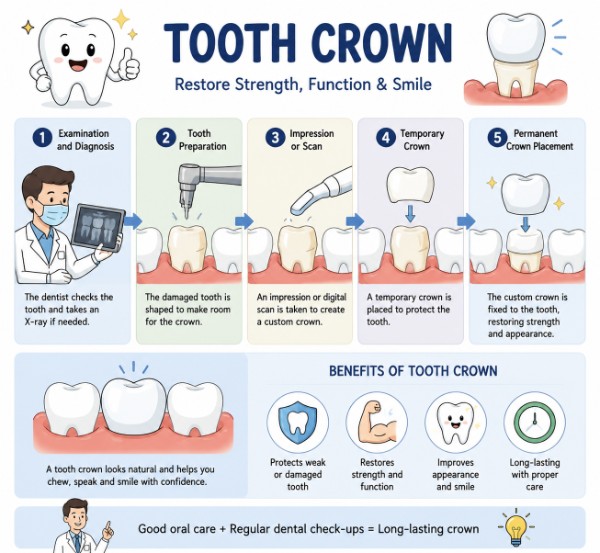
Think of a dental crown as a cap that covers and protects a weak or damaged tooth, similar to a helmet, but designed to look and function like a natural tooth. If you are considering a tooth crown procedure in Mansarovar Sector 1, jaipur, understanding the available types, costs, procedure, and material options can help you make a more informed decision.

Dental Crown Procedure
A dental crown procedure generally requires two appointments.
First Appointment
During the first appointment, the dentist:
Examines and prepares the affected tooth
Shapes the tooth so the crown can fit properly
Takes a digital scan or traditional impression
Places a temporary crown, if necessary
Second Appointment
A dental laboratory creates a customised crown using the scan or impression of your tooth.
During the second appointment, the dentist:
Removes the temporary crown
Places and checks the permanent crown
Ensures proper bite alignment
Checks the colour and shape
Confirms that the crown feels comfortable
Permanently cements the crown in place
Dental Crown Cost: Why Does the Price Vary?
Patients often receive different quotations when they visit multiple dental clinics. This does not necessarily mean that clinics are charging randomly.
The cost of a dental crown depends mainly on the crown material, laboratory quality, and complexity of the patient’s case.
Some common factors affecting the price include:
Type of crown material
Whether root canal treatment is required
Digital scanning or traditional impressions
Quality and turnaround time of the dental laboratory
Complexity of the tooth preparation
Location of the clinic
Dentist’s experience and treatment standards
In India, dental crowns may cost approximately ₹3,000 for basic metal options and ₹15,000 to ₹20,000 or more for premium materials. The final price varies depending on the tooth, material, and individual treatment requirements.
Ceramic Crown vs Metal-Ceramic Crown
Ceramic Crown
A ceramic crown is made entirely from porcelain or dental ceramic, without a metal base.
Its primary advantage is appearance. A well-designed ceramic crown closely resembles a natural tooth, making it a preferred option for front teeth and other teeth visible while smiling.
Ceramic crowns may offer:
Natural colour and translucency
Better aesthetic results
No visible metal near the gumline
A suitable option for visible front teeth
Metal-Ceramic Crown
A metal-ceramic crown is also known as a PFM crown, meaning porcelain fused to metal.
It has a strong metal base covered with tooth-coloured porcelain. This provides the strength of metal with a more natural-looking outer surface.
However, over time, a faint grey line may sometimes become visible near the gumline. Metal-ceramic crowns remain an affordable and reliable option, particularly for back teeth where appearance is less noticeable.
Neither material is automatically better for every patient. The right choice depends on the location of the tooth, appearance, strength, and cost.

Tooth Cap
Where Does Zirconia Fit In?
Zirconia crowns have become increasingly popular because they combine strength with a natural appearance.
Zirconia is highly resistant to chipping and cracking. Newer types of zirconia crowns are also more translucent, allowing them to resemble natural teeth more closely.
Zirconia crowns are often considered for:
Back teeth exposed to heavy chewing pressure
Patients who grind or clench their teeth
Teeth requiring additional strength
Patients who want a metal-free option
Cases where both appearance and durability matter
Molar Crowns: Why Are Back Teeth Different?
Strength is usually the primary concern when selecting crowns for molars.
Back teeth handle significantly more pressure during chewing than front teeth. Therefore, zirconia and metal-ceramic crowns are commonly recommended for molars, while highly aesthetic ceramic crowns are generally preferred for visible front teeth.
Other factors must also be considered. For example, patients who grind their teeth may place additional pressure on their crowns and natural teeth. In such cases, the dentist may recommend a stronger crown material and possibly a night guard.
Which Dental Crown Should You Choose?
There is no single crown material that is ideal for every tooth or every patient. A dentist should consider the tooth’s location, bite pressure, remaining tooth structure, appearance, and budget before recommending a crown.
General recommendations may include:
Teeth visible while smiling: Ceramic or high-translucency zirconia
Back teeth with heavy chewing pressure: Zirconia or metal-ceramic
Back teeth with a limited budget: Metal-ceramic
Patients with teeth grinding or bruxism: Zirconia may often be preferred
Patients prioritising a natural appearance: Ceramic or aesthetic zirconia
The best decision should be made after a proper dental examination, X-rays, and bite evaluation. You should also discuss your budget and how long you expect the crown to last.
A proper consultation can help you avoid selecting an unsuitable material and needing an early replacement.
Frequently Asked Questions
1. How long does a dental crown last?
With proper oral hygiene and regular dental check-ups, a crown may commonly last between 8 and 15 years. Its lifespan depends on the material, bite pressure, dental hygiene, and habits such as teeth grinding.
2. Does getting a dental crown hurt?
The tooth and surrounding area are numbed before the procedure, so the treatment itself should not be painful. Mild sensitivity or discomfort for a day or two may be normal.
3. Can I eat normally after getting a crown?
Avoid sticky, hard, or chewy foods while wearing a temporary crown. After the permanent crown is fitted, you can usually return to normal eating once the dentist advises that it is safe.
4. Is root canal treatment always required before a crown?
No. Root canal treatment is only required when the tooth’s nerve is infected or irreversibly damaged. Many crowns are placed over healthy but structurally weakened teeth without performing a root canal.
Final Advice
If your dentist has recommended a crown and you are still unsure about the right material, discuss the available options during your consultation instead of choosing solely based on online information.
Bring your existing X-rays or visit for a dental evaluation in Mansarovar Sector 1, jaipur. Ask about the crown materials by name, understand the benefits and limitations of each option, and request a complete cost breakdown before proceeding.
Book a free dental consultation to find the right crown material for your tooth, bite, and budget.